Carbon Fiber Max™ is a Revolutionary Lightweight Product
Carbon Fiber Max™ is a hybrid nanotube-reinforced nylon designed as a high-performance alternative to traditional carbon fiber composites. Carbon fiber-reinforced materials are used in aircraft parts, racing car bodies, golf club shafts, bicycle frames, fishing rods, automobile springs, sailboat masts, and many other components where light weight and strength are required. Carbon Fiber Max™ offers a compelling alternative at a much better price point. Since carbon fiber is scarce and production cannot keep up with demand, Carbon Fiber Max can fill that gap effectively. Carbon Fiber Max™ is a blend of carbon nanotubes, tungsten disulfide nanotubes, and nylon. Carbon Fiber Max has the major advantage that it can be injection molded to create complex parts where carbon fiber cannot. It is designed to offer 30–35% lower weight with superior toughness and wear resistance compared to standard nylon. For these reasons, cogs, gears, and countless parts made from Carbon Fiber Max™ are engineered to significantly outperform standard plastic parts in toughness, wear resistance, and temperature performance.
Carbon Fiber Max™ is an Advanced Lightweight Material
Carbon Fiber Max™ is a hybrid nanotube-reinforced nylon engineered as a high-performance alternative to traditional carbon fiber composites. It delivers 30–35% lower weight with near-equivalent specific strength while offering dramatically superior toughness, wear resistance, and impact performance. Thanks to its injection moldability and significantly lower cost, Carbon Fiber Max fills the growing gap left by carbon fiber supply shortages and high prices.
About Carbon Fiber Max™
Carbon Fiber Max™ is a hybrid nanotube-reinforced nylon material made from high-performance Nylon 6/6 combined with carbon nanotubes and tungsten disulfide nanotubes. It can be manufactured into either fiber, woven fabric, or pellets depending on the end user’s specific needs.
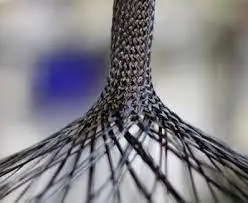
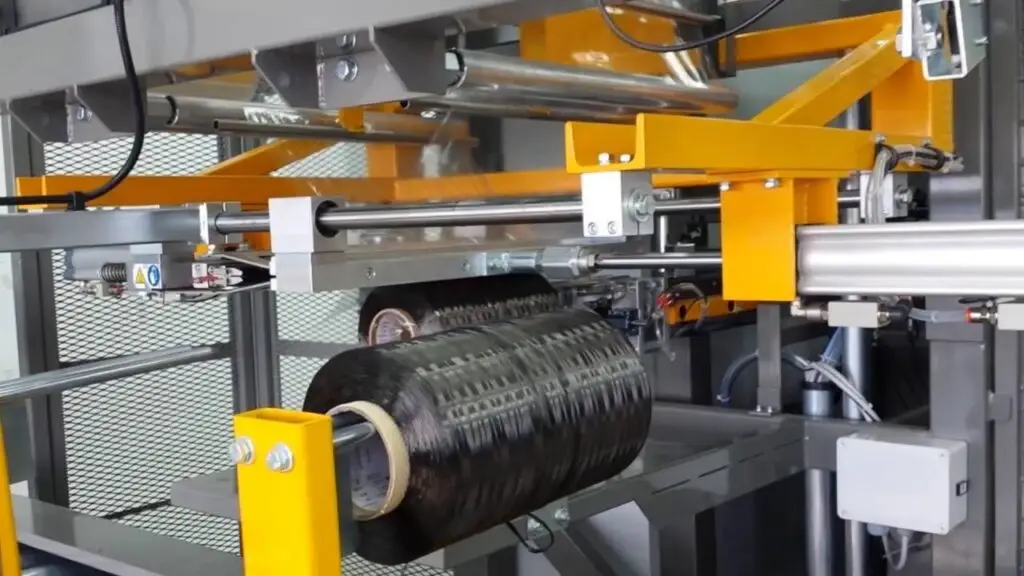
The production process starts by heating nylon until it becomes a soupy liquid. Carbon and tungsten disulfide nanotubes are then thoroughly mixed into the liquid to create a uniform black composite material. This composite is extruded into continuous fine threads, which are wound onto industrial spools. The spools are sent to specialized weaving facilities where the threads are transformed into high-performance fabric.
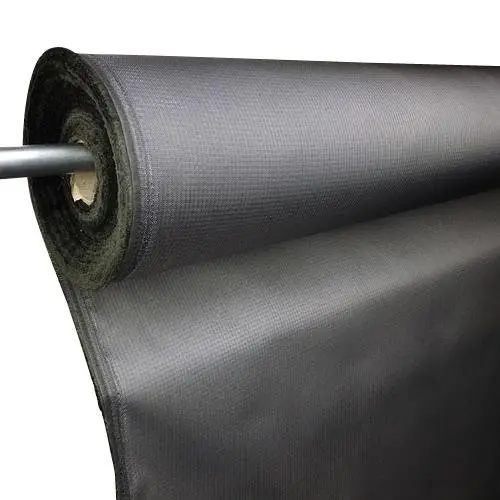
This woven fabric can be cut and strategically layered into molds, much like traditional carbon fiber. It is then coated with clear plastic resin and cured in a vacuum oven (enclave) to produce strong, lightweight parts such as car bumpers, golf club components, cell phone cases, and many other products.
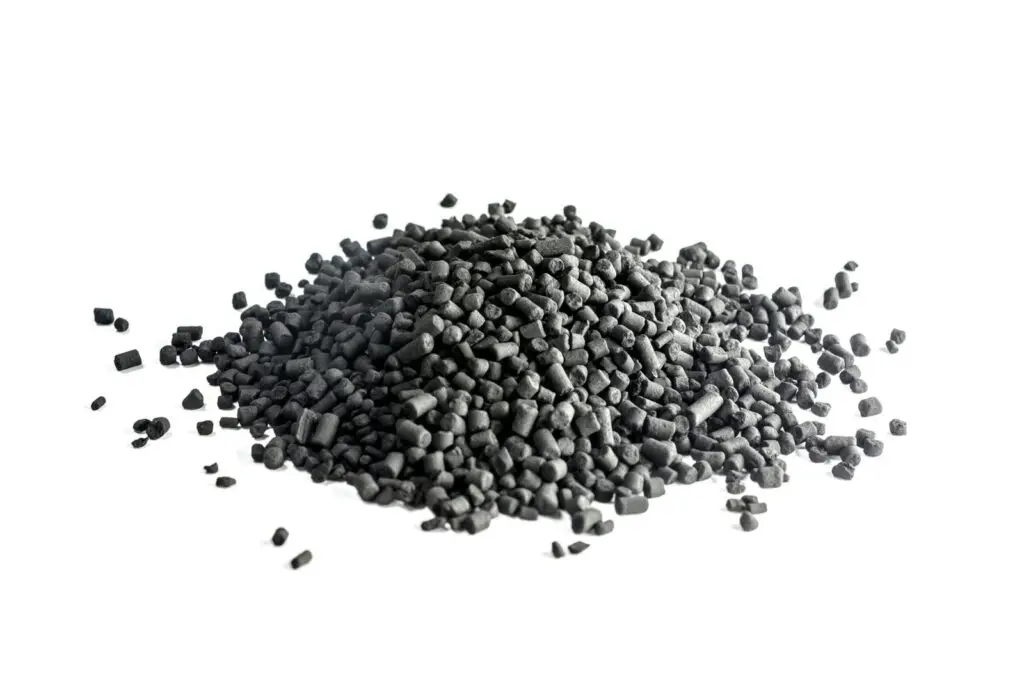
Alternatively, the base composite can be formed into Carbon Fiber Max™ pellets. These pellets are used by manufacturers for injection molding, allowing them to create complex, high-strength solid parts like gears, bearings, pulleys, and automotive components efficiently and at scale.
Carbon Fiber Max™ is extremely versatile. We supply both woven fabric for traditional composite applications and pellets for high-volume injection molding.
Versatility
Carbon Fiber Max™ is One of the Most Versatile Substances
Injection Molding
Carbon Fiber Max™ base materials can be extruded into fibers for use in traditional composite molds with resin, or injection molded directly into durable, high-strength parts.
Carbon Fiber Max™ Pellets
These pellets are supplied to manufacturers for high-volume injection molding of precision components.
Extruder
The composite material is run through an extruder that produces continuous fine threads, similar to fishing line.
Carbon Fiber Max™ Fabric
The threads are woven into high-performance fabric that can be used for jackets, tarps, technical textiles, and many other fabric-based products.
Carbon Fiber Max™ Parts
Carbon Fiber Max™ can be formed into strong, lightweight parts for countless industries, including automotive, aerospace, industrial tools, sporting goods, and consumer products.
Carbon Fiber Max™ Thread Spools
The extruded threads are wound onto spools and sent to industrial weavers for conversion into composite fabrics.
The Benefits of Carbon Fiber Max™
Many Distinct Advantages
Carbon Fiber Max™ offers numerous benefits that set it apart as a superior material choice for engineers and designers worldwide. It is a low-density material with an excellent strength-to-weight ratio, allowing it to deliver high performance without the added weight of steel or aluminum. This makes it especially well-suited for applications in automotive, aerospace, and other weight-sensitive industries. Additionally, Carbon Fiber Max™ provides superior toughness and fatigue resistance compared to many traditional materials, meaning parts can withstand repeated stress and impact without wearing out as quickly. It also delivers strong overall mechanical performance, making it suitable for a wide range of demanding applications.
The Advantages of Carbon Fiber Max™ are:
- Higher temperature capabilities.
- Increased Durability over typical plastic injected parts.
- Superior price point.
- Stronger composite tensile strength.
- Unlike carbon fiber that is scarce and cannot keep up with demand, Carbon Fiber Max can be produced in abundance and can meet or exceed demand.
- Opens many opportunities for new markets.
Why Choose Carbon Fiber Max™
Because of its excellent strength-to-weight ratio, Carbon Fiber Max™ can be used across a wide range of industries and applications. It offers engineers and designers greater flexibility, as it can be easily shaped and molded in ways that traditional materials like aluminum and steel cannot. Unlike most metals, which tend to corrode when exposed to moisture and harsh chemicals, Carbon Fiber Max™ provides strong corrosion and wear resistance, making it well suited for demanding or outdoor environments.
Carbon Fiber Max™ also delivers good moisture resistance for many applications. The material does not absorb moisture as readily as many conventional plastics or fabrics, which helps reduce the risk of mold or mildew formation. This property makes it a practical and reliable choice for products that may be exposed to water, humidity, or wet conditions, such as outdoor gear, protective coverings, technical textiles, and marine accessories.
The combination of light weight, superior toughness, excellent manufacturability, and competitive pricing makes Carbon Fiber Max™ a standout material that truly opens up a wide variety of new markets and high-volume applications.
CARBON FIBER MAX™
Carbon Fiber Max™ is a high-performance hybrid material formed from an 80% Nylon 6/6 base combined with 10% tungsten disulfide (WS₂) nanotubes and 10% carbon nanotubes.
The formula uses Zytel FR15, a flame-retardant PA 66 resin that meets UL94V-0 requirements at thicknesses down to 0.75 mm (0.03 in) and contains no phosphorous or halogens.
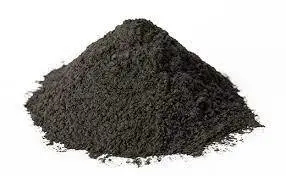
The mixture is prepared by grinding the nylon into a fine powder, then carefully blending in the tungsten disulfide and carbon nanotube particles. This compound is fed into a plastic extrusion machine where it is melted and extruded into a fine 0.25 mm cord, which is then cut into uniform pellets for further processing and use. The resulting pellets and fiber forms enable versatile manufacturing options, from high-volume injection molding to traditional composite layups.
Carbon Fiber Max™ and Wind Turbine Blades
Carbon Fiber Max™ could bring significant cost and performance benefits to the wind industry, opening up yet another major market opportunity. Research indicates that it performs favorably compared to current commercial materials used in wind turbine blades, particularly in cost-specific properties that matter most to the industry.
Wind blades made with Carbon Fiber Max™ are estimated to weigh approximately 25% less than traditional fiberglass blades, based on design specifications and analysis of comparable material systems. This weight reduction allows for longer blade designs that capture more energy, especially in lower wind speed locations. Additionally, the superior fatigue resistance of Carbon Fiber Max™ could help extend blade lifetime under the constant stress and cyclic loading typical of wind turbines.
Carbon Fiber Max™ offers performance characteristics that align well with the specific mechanical loads experienced by wind turbines. Commercial development of this material can help the wind industry realize these benefits on a broader scale while helping to lower the overall cost of wind energy production.
CARBON FIBER MAX™ APPLICATIONS
Sporting goods:
Tennis rackets, golf clubs, softball bats, hockey sticks, archery bows, and arrows are all products that can be manufactured with Carbon Fiber Max™. Lighter weight equipment without compromising strength is a major advantage in sports, and this is where Carbon Fiber Max™ truly shines. Athletes benefit from improved swing speed, better control, and greater durability, helping them perform at a higher level while reducing fatigue.


Military and Defense:
The military was one of the first industries to adopt carbon fiber on a significant scale and continues to use it extensively in rockets, aircraft components, and many other high-performance applications. This makes the military an ideal candidate for Carbon Fiber Max™, which offers a compelling combination of lightweight performance, superior toughness, and a much better price point.
Aerospace:
The aerospace industry was one of the first to adopt carbon fiber, beginning with Rolls Royce’s carbon fiber compressor blades in the 1960s. It has since become a preferred replacement for aluminum and titanium in many components due to its excellent strength-to-weight ratio. With its lighter weight, strong toughness, and significantly lower cost, Carbon Fiber Max™ is well positioned to capture a meaningful share of this important market.


Automobiles:
Carbon Fiber Max™ is poised for rapid adoption in automobile manufacturing. Its excellent strength-to-weight ratio makes it ideal for high-performance vehicles in Formula 1, NASCAR, and premium cars, where reduced weight translates directly to better speed and efficiency. Combined with its sleek high-tech appearance and significantly lower cost, Carbon Fiber Max™ is positioned to become the preferred carbon fiber alternative across the automotive industry.